



ControlNet
A neural network architecture that adds extra conditions to control diffusion models is a game changer for AI image generation
Tags:Ai visual generationControlNet edge conditioning image generation control pose-guided image creation Stable Diffusion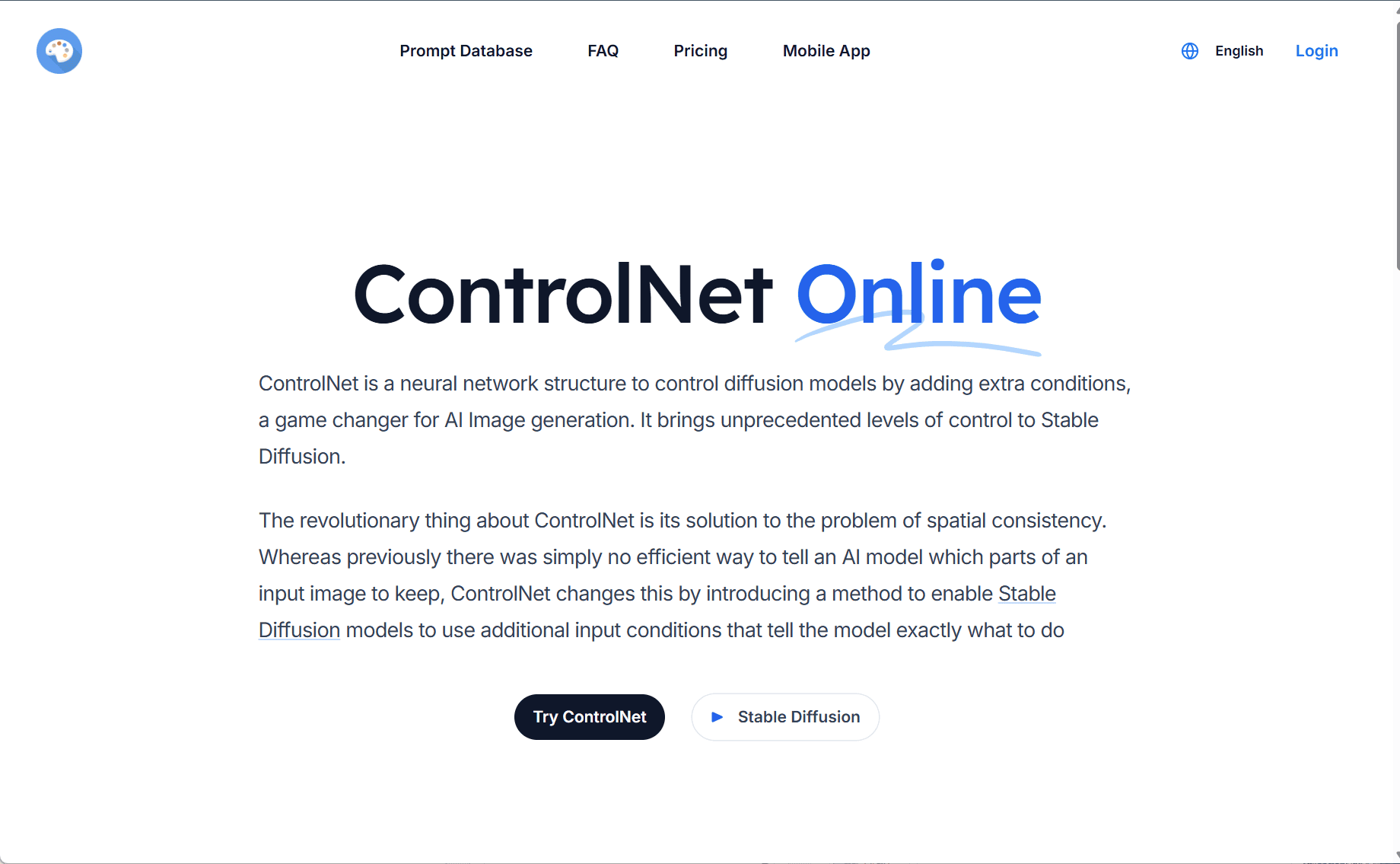
ControlNet: Enhancing Stable Diffusion with Precise Image Control
Overview
ControlNet is an advanced neural network extension for Stable Diffusion, designed to provide users with precise control over image generation. By integrating additional conditioning inputs such as edge maps, depth maps, and human poses, ControlNet allows for the creation of images that closely align with specific requirements, enhancing the creative process for artists and designers.
Key Features
-
Enhanced Control: ControlNet enables the use of various conditioning inputs to guide the image generation process, allowing for detailed customization.
-
Integration with Stable Diffusion: Seamlessly integrates with Stable Diffusion models, enhancing their capabilities without the need for retraining.
-
Versatility: Supports a wide range of conditioning inputs, including edge maps, depth maps, and human poses, to cater to diverse creative needs.
Applications
-
Art and Design: Artists can use ControlNet to create images with specific compositions and poses, facilitating the design process.
-
Game Development: Developers can generate assets with consistent styles and structures, streamlining the asset creation process.
-
Education and Research: Researchers can utilize ControlNet to explore the effects of different conditioning inputs on image generation, advancing the understanding of diffusion models.
Installation and Usage
To utilize ControlNet, users can install it as an extension within the Stable Diffusion framework. Detailed installation guides and usage instructions are available on various platforms, ensuring that users can set up and begin using ControlNet efficiently.
Conclusion
ControlNet significantly enhances the capabilities of Stable Diffusion by providing users with precise control over the image generation process. Its integration with various conditioning inputs allows for the creation of highly customized images, making it a valuable tool for professionals in art, design, and research fields.
data statistics
Relevant Navigation