





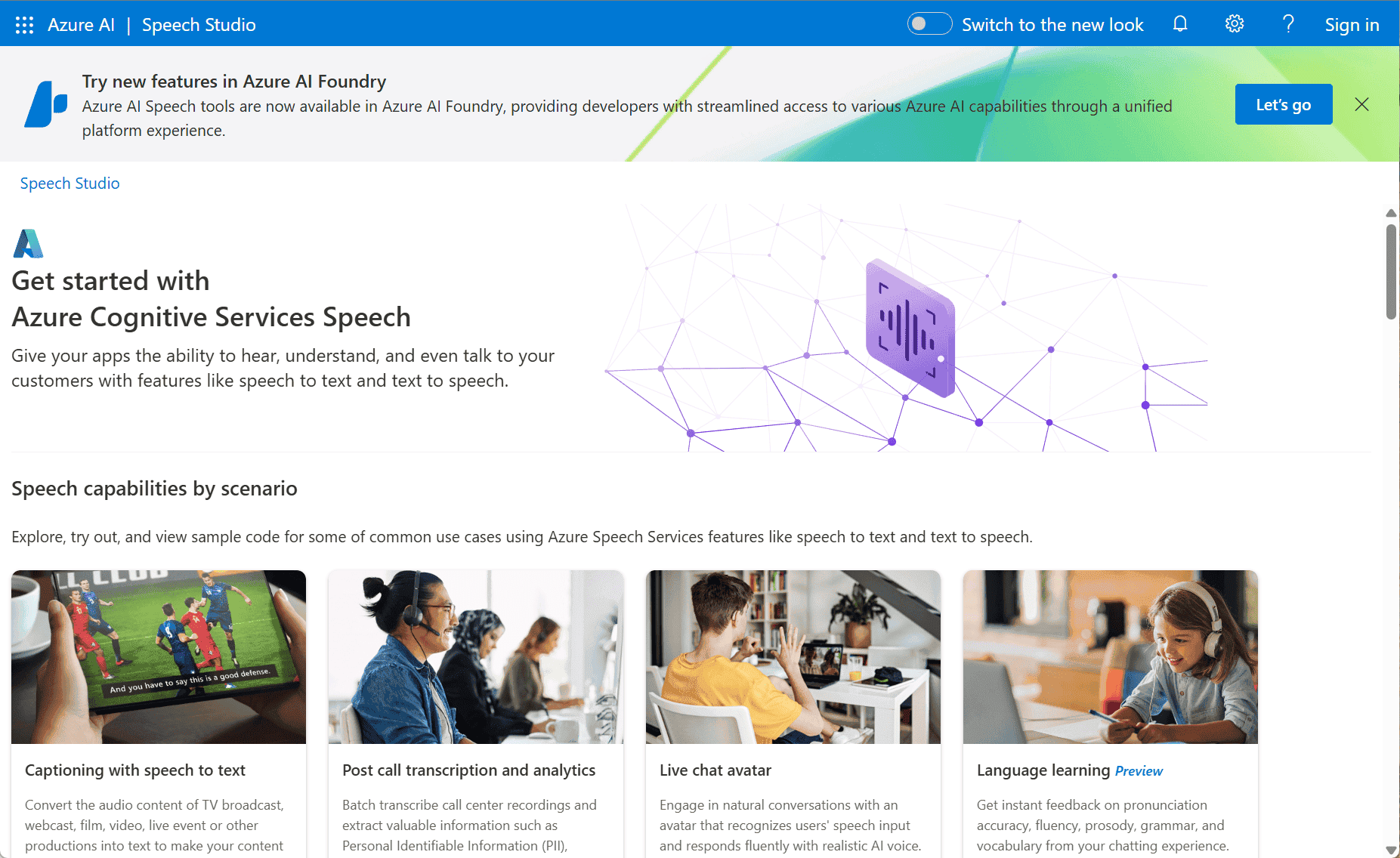
Microsoft Speech is a comprehensive suite of speech recognition and synthesis tools designed to enable users to integrate voice capabilities into their applications, websites, and services. This platform is part of Microsoft’s Azure cloud services, offering a robust set of APIs and features aimed at enhancing user experience through voice-driven interactions.
The core offering of Microsoft Speech includes speech-to-text and text-to-speech functionalities. The speech-to-text service allows users to convert spoken words into written text with high accuracy, making it ideal for transcription, voice commands, and other applications requiring real-time voice recognition. The platform supports a wide range of languages and accents, ensuring broad usability for global audiences.
On the text-to-speech side, Microsoft Speech provides high-quality, natural-sounding voice synthesis. This service is ideal for creating voiceovers for applications, audiobooks, virtual assistants, or any scenario where turning text into lifelike speech is needed. The text-to-speech feature offers several customizable voice options, including different accents, tones, and speaking styles, ensuring that the generated audio matches the specific needs of the user.
One of the standout features of Microsoft Speech is its real-time transcription capabilities, which can be applied to live conversations, meetings, or podcasts. This can be especially useful for businesses, educational institutions, or anyone who requires accurate, real-time text capture of spoken content. The service is designed to handle noisy environments and complex speech patterns, improving its reliability and accuracy in various settings.
Additionally, the platform supports speaker identification, enabling users to distinguish between different speakers in a conversation or meeting. This feature is particularly useful in environments where multiple individuals are speaking, allowing for clearer transcriptions and a better user experience.
Microsoft Speech is also integrated with other Azure services, offering easy scalability for businesses that need to process large volumes of speech data. This integration allows for enhanced capabilities, such as sentiment analysis, language translation, and text analytics, providing users with deeper insights into spoken content.
For developers, Microsoft Speech offers an easy-to-use API, making it simple to integrate speech recognition and synthesis into applications. The platform is cloud-based, ensuring that developers do not need to manage infrastructure themselves. It also provides detailed documentation and support, making it accessible even for those who are not experts in speech technologies.
In conclusion, Microsoft Speech offers a powerful suite of tools for voice recognition and synthesis, ideal for businesses, developers, and content creators. Its real-time transcription, natural-sounding text-to-speech capabilities, and integration with other Azure services make it a versatile platform for a variety of applications. Whether used for customer service, transcription, or creating voice-driven applications, Microsoft Speech is a reliable and scalable solution for adding voice capabilities to any project.