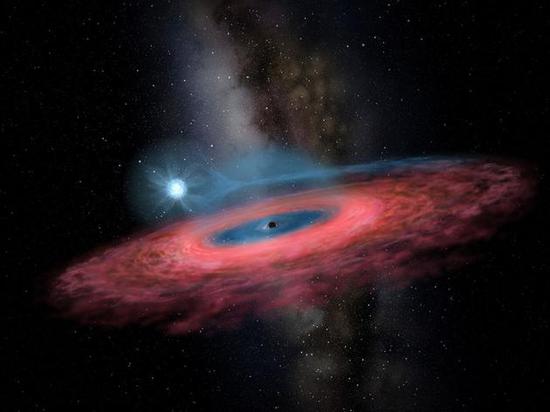
From an astronomical perspective, 2019 could truly be called the year of black holes. That year brought several groundbreaking advances in black hole research. On April 10, scientists released the world’s first—and so far the only—image of a black hole. Then on November 28, researchers from the National Astronomical Observatories of the Chinese Academy of Sciences discovered the largest stellar-mass black hole in our galaxy. In addition, American scientists identified the smallest mass black hole in the universe. Among these discoveries, the first black hole image was undoubtedly the most exciting.
An artistic representation of LB-1, the heaviest stellar-mass black hole in the Milky Way (illustrated by Yu Jingchuan).
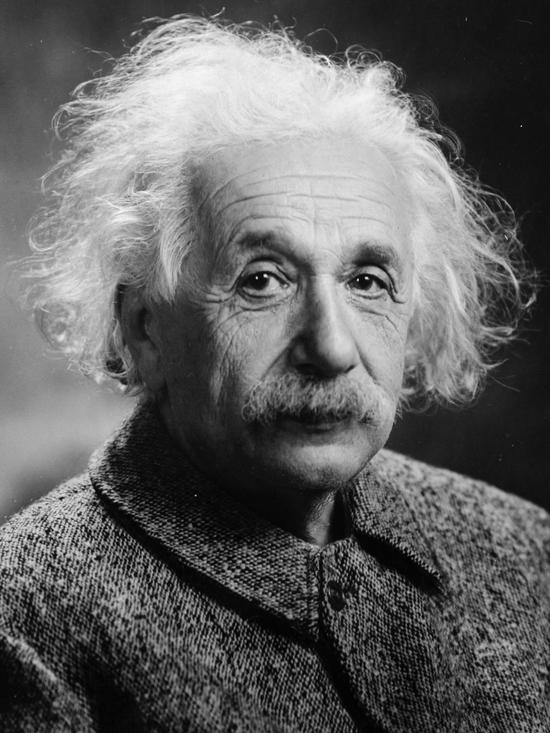
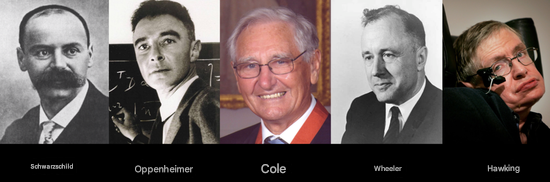
In 1915, Einstein proposed the theory of General Relativity, and a few months later, physicist Karl Schwarzschild, stationed in a German trench, found the exact solution to Einstein’s equations. This solution is what we now know as the black hole solution—specifically, the solution for a non-rotating black hole. This marked the first modern description of a black hole.
For nearly a century after that, human research on black holes remained purely theoretical, and we knew almost nothing about what black holes actually looked like.
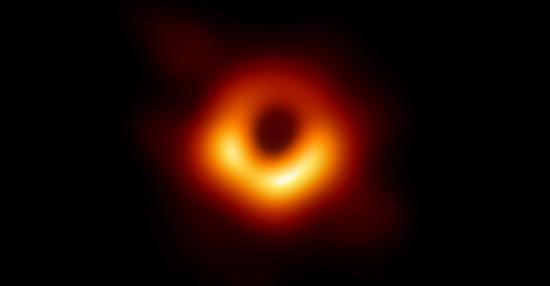
It wasn’t until the last decade or so that advancements in technology allowed humanity to pursue and explore the true nature of black holes. Finally, in April 2019, over 300 scientists from 20 countries worldwide jointly released the first-ever photograph of a black hole.
By delving into the history of black hole exploration, we can glimpse the long history of scientific progress.
When it comes to black holes, we may feel a sense of fear, as they are often portrayed in films as insatiable giants that devour everything, even stopping light and time. However, in the eyes of some physicists, black holes are incredibly fascinating, as they may one day serve as gateways to time, enabling humanity to traverse the universe at great speeds.
Overall, black holes are both mysterious and extraordinary celestial objects. Their gravity is immensely strong, so to understand them, we must explore the history of gravity itself.
History of Gravitation
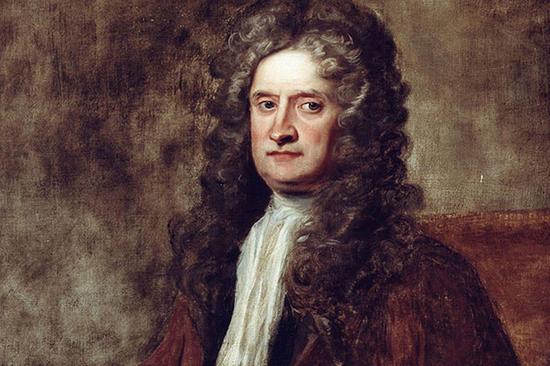
When we talk about gravity, we naturally think of the great 17th-century physicist—Isaac Newton. Sitting under a tree, he observed an apple fall and realized that there must be a universal force in the universe, which we now call gravity.
Newton was an extraordinary physicist. Not only did he come up with this idea, but he also brought it to life. Based on this idea, he wrote down the famous formula for universal gravitation. Through this formula, we understand that he believed gravity exists because objects have mass.
He summarized this theory in his classic work Mathematical Principles of Natural Philosophy. After its publication, the theory was highly praised because it not only provided an excellent explanation for the movement of celestial bodies in space but also perfectly predicted their future motion.
In the centuries that followed, his theory was continually verified and widely applied, not only in physics but also across many other fields. Newton’s theory can be seen as the foundation of modern science. However, by the 19th century, further observations led scientists to challenge Newton’s theory. At the beginning of the 20th century, Einstein first proposed the theory of Special Relativity, and ten years later, he introduced General Relativity. In this new theory, he offered a completely fresh perspective on gravity. He argued that gravity is not directly caused by mass, but rather, massive celestial bodies cause the curvature of spacetime, and this curvature produces the gravitational effect.
A few months after Einstein proposed the theory of General Relativity, German physicist Karl Schwarzschild obtained the exact solution to this complex equation. Unfortunately, although this exact solution was the precise solution for black holes, it described a non-rotating black hole. However, nearly all celestial bodies in the universe, including Earth, are rotating. So, when Einstein saw this exact solution, he was surprised but did not believe that such a solution could truly exist.
In the following decades, due to war and technological limitations, research on black holes stagnated. It wasn’t until 1939 that Oppenheimer and his student discovered that the collapse of massive stars could potentially form a singularity, which is what we now know as a black hole. Aside from this, there wasn’t much progress in black hole research.
Since no traces of black holes had ever been observed, Einstein remained skeptical about the existence of such mysterious celestial bodies until his death in 1955.
The golden 30 years of black hole research
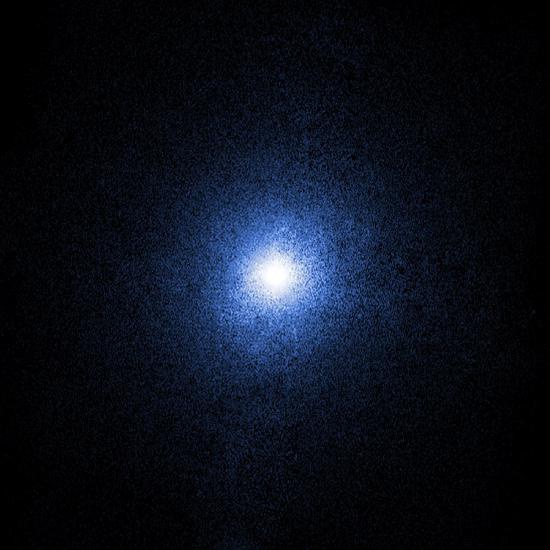
Photo of Cygnus X-1 taken by the Chandra X-ray Observatory. Source: Wikipedia
By the 1960s, in 1963, New Zealand mathematician Roy P. Kerr obtained another exact solution to the equations of General Relativity. This time, the black hole solution described a rotating black hole. Then, in 1964, American scientists, by launching sounding rockets, first detected traces of a black hole. This marked the discovery of the first stellar-mass black hole in human history, which we now know as Cygnus X-1.
With both theoretical and observational breakthroughs, a large number of astronomers and physicists were drawn into this field. As a result, the next two to three decades marked the golden age of black hole research. Nearly all of the knowledge we have about black holes today was gained during this period.
During this period, there was one particularly prominent scholar: Professor John Archibald Wheeler from Princeton University. Although he did not coin the term “black hole,” it was through his extensive promotion that the term became widely known.
In addition to Wheeler, another physicist who deserves special mention is Stephen Hawking. In the 1970s, when everyone believed that black holes emitted no radiation, Hawking proposed that black holes should emit radiation, now known as Hawking radiation. Though this radiation is incredibly weak, the difference between zero and one is vast.
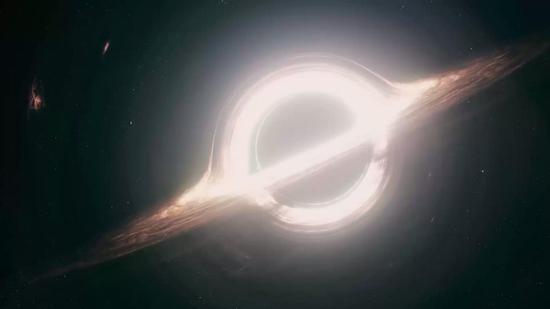
In the following decades, despite significant theoretical advancements, we still had no idea what a black hole actually looked like. So, the most shocking portrayal of a black hole came in 2014 with the release of the movie Interstellar.
The portrayal of the black hole in this movie was truly breathtaking for me. And not just for me—Nobel laureate Kip Thorne, who served as the scientific advisor for the film, was equally ecstatic when he first saw the high-definition rotating black hole. To achieve this high-definition representation, the British company Double Negative assembled a team of 30 people and spent nearly a year collecting 8000TB of data, which ultimately resulted in the stunning black hole visual effects presented to moviegoers. They also published related articles to showcase their computational techniques.
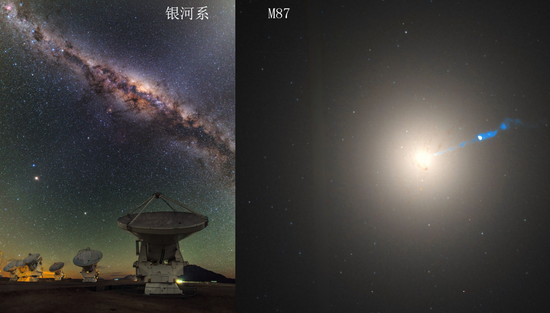
From a scientific perspective, black hole detection has never ceased. Ten years ago, with advancements in technology, we reached a point where we could connect telescopes from around the world. Scientists from numerous countries came together to attempt true imaging of certain black holes, and they called this project the Event Horizon Telescope (EHT) project.
They aimed to observe two black holes: one located at the center of the Milky Way, and the other, the M87 black hole, which is about 55 million light-years away. The image on the right shows the optical band representation of the M87 black hole.
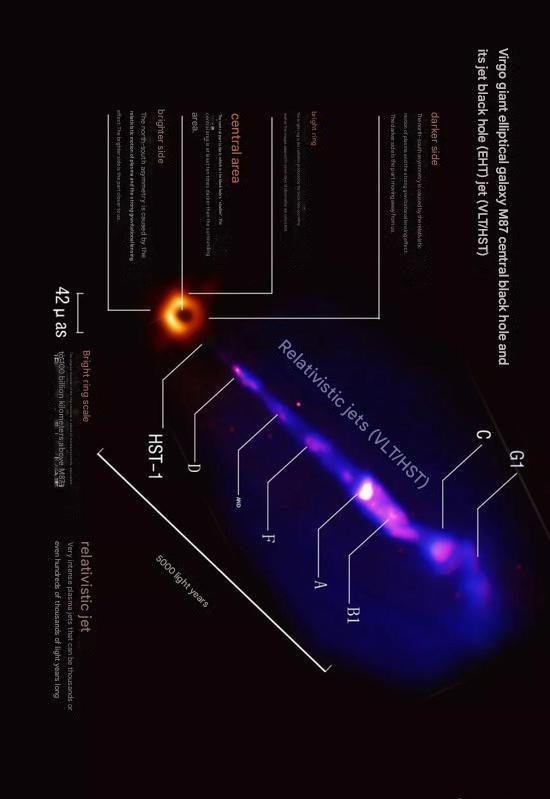
How large of a telescope is needed to truly observe the central black hole? The image above provides a great explanation. The blue represents the image captured by the Hubble Space Telescope, and the central ring indicates the scale of the black hole we aim to capture. The difference between the two is at least several thousand times. Therefore, to distinguish the central black hole’s appearance using the most advanced telescopes available today, the telescope’s aperture would need to be several kilometers in size.
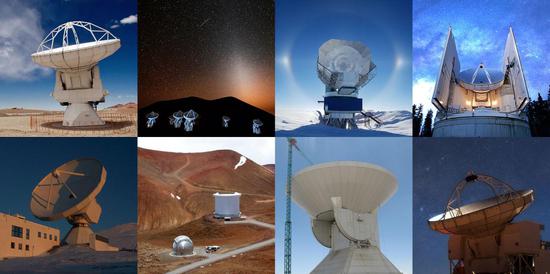
Scientists are unable to build such enormous optical telescopes, so they developed a technology called VLBI (Very Long Baseline Interferometry) networking, which connects almost all submillimeter-wave telescopes around the world into a massive network. With an effective aperture of over 10,000 kilometers, this network can capture images of the central black hole. These telescopes are typically located at very high altitudes to minimize atmospheric absorption of electromagnetic waves.
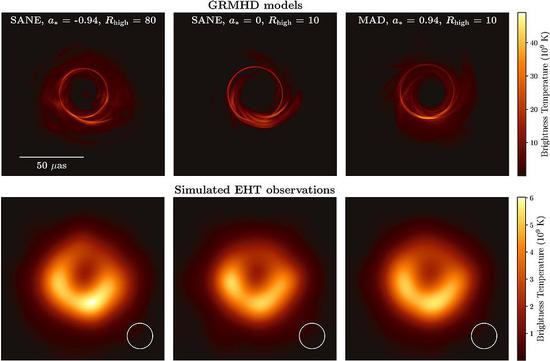
In addition to the continuous improvement of observational equipment, a lot of simulation work is also required on the theoretical side because the environment around a black hole is very complex. Using simple paper and pen, scientists find it difficult to describe the motion of gas around a black hole. This requires relativistic magnetohydrodynamics, and each calculation needs thousands of CPUs and several months of processing time.
The Event Horizon Telescope team made the final calculations for various scenarios, and the image above shows some of the results. Finally, everything was ready. From April 10 to 15, 2017, they used telescopes from eight different locations around the world to observe these two black holes, ultimately gathering about 5 PB of data.
Due to the massive amount of data and one of the telescopes being located in Antarctica, it was difficult to transmit the data back using the existing network. Perhaps in the future, when 5G technology matures, we will be able to transmit it directly. The method scientists used was to copy the data onto disks and fly them back to the data center.
There are two data centers, one located at MIT in the United States and the other in Germany. After receiving the data, scientists conducted relevant analyses and verified the images using different methods. Once confirmed, they reconstructed the images, ultimately producing the black hole photo we saw. At the same time, scientists had already done numerical simulations, comparing them with simulation libraries to infer the properties of the black hole. This led to the global release of the first black hole photo on April 10, 2019, at 9 PM.
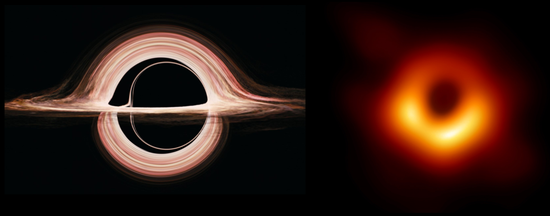
With the black hole photo and the previously obtained numerical results, scientists were able to infer the properties of the black hole. You may have a strong impression of the black hole in the movie Interstellar. Of course, we can’t fly to M87 to make a direct comparison, but we can use modern, highly advanced computers to simulate the entire process. You might ask, “Why does the first black hole photo we saw look so different from the one in Interstellar?”
The main reason for the difference is that the perspectives of the black holes are different. The M87 black hole photo was taken along the direction of the black hole’s rotation, while in Interstellar, the black hole was depicted from the equatorial direction. This is the biggest difference between the two.
Modern technology has not only greatly facilitated black hole research, but when discussing the impact of technology on astronomical studies, gravitational waves are a topic worth mentioning. Gravitational waves can be described as ripples in spacetime. They are the immense energy released during collisions or explosions of dense celestial bodies, causing fluctuations in spacetime.
These fluctuations are incredibly weak. For example, we know that the hydrogen bomb is the most destructive weapon on Earth. The hydrogen bomb tested by the Soviet Union years ago had an equivalent yield of 50 megatons, the largest destruction caused by any hydrogen bomb. If we were to stand at the very center of the hydrogen bomb explosion and measure its disturbance in spacetime, the disruption would only be 10 to the power of -27. A nucleus of an atom is about 10 to the power of -18 meters, and a human hair is about 10 to the power of -5 meters. A comparison reveals that despite the massive destruction the hydrogen bomb caused to surrounding objects, it had almost no effect on spacetime.
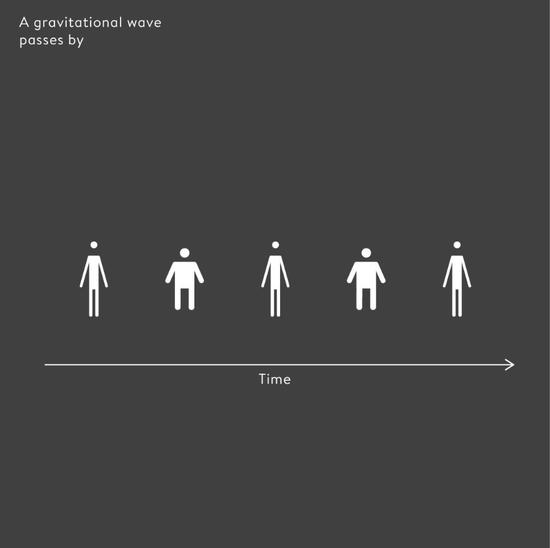
Now, imagine one day a very powerful gravitational wave passing through Earth—what impact would it have on humans on Earth? It would continuously stretch the human body.
The image above exaggerates the effect of gravitational waves on a person, showing someone suddenly becoming thinner or gaining weight. In reality, the changes caused by gravitational waves to the human body are much smaller than the size of an atomic nucleus.
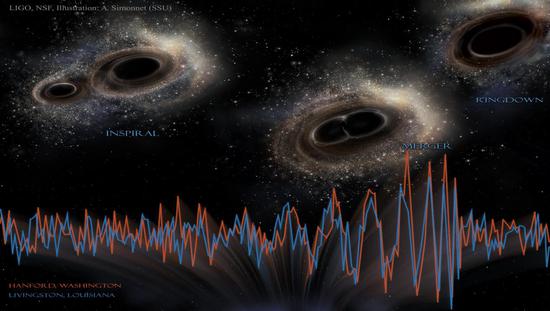
In September 2015, humans detected gravitational waves for the first time, detected by the Laser Interferometer Gravitational-Wave Observatory (LIGO) in the United States. The effect of this gravitational wave caused a change in size on the scale of just one atom, measuring only 10 to the power of -18 meters.
This also demonstrates that modern technology has reached a level of precision that allows us to make such measurements.
From the proposal of general relativity in 1915 and the prediction of gravitational waves in 1916, to the first direct detection of gravitational waves in 2015, humanity has gone through a century of exploration.
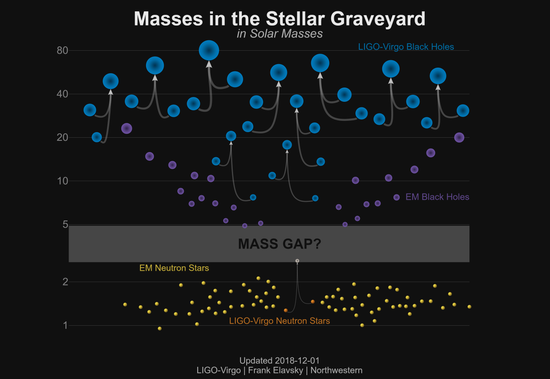
Gravitational waves have also helped humanity discover many unexpected things, such as the existence of extremely massive black holes in the universe, which we had never imagined. The purple dots represent the black hole masses observed by traditional telescopes, while the blue dots represent the extremely massive black holes discovered with the help of gravitational waves. Therefore, gravitational waves have become a new window for humanity to explore black holes.
Next step: Taking dynamic photos of black holes
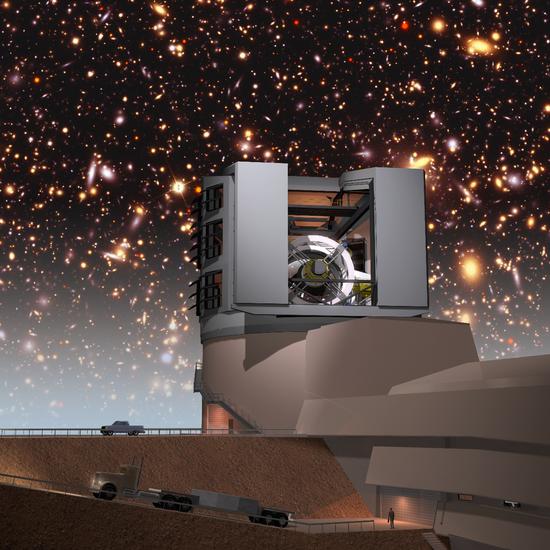
In the coming years, there are several other larger projects underway, such as the LSST project in the United States (Large Synoptic Survey Telescope). Many of the images we see of the universe today are static, like a beautiful painting, but the goal of this telescope is to create an animated map of the universe. Its data volume can reach up to 15TB every night, which is a significant challenge for current computing processing capabilities.
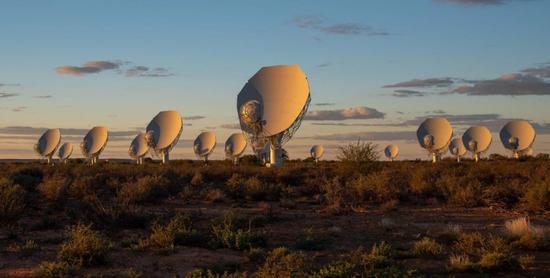
Of course, there are even bigger challenges awaiting us, such as the Square Kilometre Array (SKA), another large-scale project involving China. It will span over one square kilometer and include more than 20,000 small telescopes. The amount of data generated every second will reach 2TB. Therefore, processing such vast amounts of data is indeed a significant challenge.
Looking at the development of human science as a whole, the advancement of modern science has benefited greatly from astronomical observations. In the past few decades, astronomy has benefited immensely from modern technology. Modern scientific advancements have allowed scientists to discover a broader and more fascinating universe. As a fundamental discipline, I deeply agree with the statement made by the president of MIT after the discovery of gravitational waves. He said, “Basic science is very laborious, rigorous, and slow, yet it is also incredibly shocking, revolutionary, and catalytic. Without fundamental disciplines, the best ideas cannot be improved, and innovation would only be small-scale. Only with the progress of basic science can our entire society make progress.”